As we get closer to my book’s release date, I think it’s time for some Imperial Mars exclusive content. I’ve been writing in this universe for four years, so it’s developed quite a lot of worldbuilding and backstory. Today we’re going to talk about a charming custom among the Martian nobility: the coming-out ball.
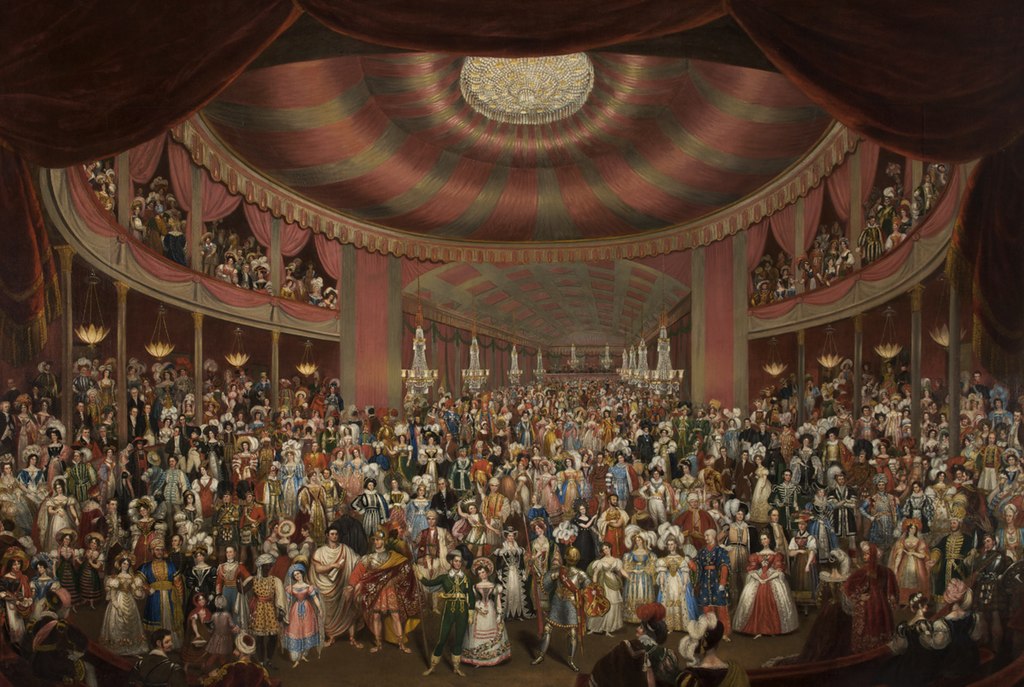
While it is not strictly required to have such a ball, it’s considered so essential to a young person’s social debut that families often go deeply into debt for one. If a ball truly cannot be managed, they might have a coming-out dinner. Only the most impoverished families settle for only coming-out announcements.
On Mars, children are not considered to have a romantic affiliation, and their gender identity is considered only provisional. As children they may change their minds about these things at any time, and they don’t need to inform anyone unless they choose. But at a coming-out ball, around the age of eighteen, they announce to the world who they are and whom they wish to marry. There are a number of options, or families sometimes create their own.
Of course no one would be so obvious as to actually state the young person’s preferences in so many words. Instead, the invitations give the clue. The cardstock used expresses the debutant’s gender identity: cream for woman, gray for man, and white for another identity. Some families send out invitations on colored or tinted stock to express some more expansive identity. Since the proper pronouns are used throughout the invitation, there can be no real confusion.
The border of the card expresses the young person’s romantic affiliation. If the person wishes to court and marry women, the card has a burgundy edge. For an affiliation toward men, dark green is used. Blue expresses indifference—that is, the young person is willing to court persons of any gender. At times, these colors are mixed, for finer degrees of precision.
A black border suggests they wish to marry, but intend for the relationship to remain platonic. If the invitation has no border, the young person does not wish to marry at all. However, this is rare. Marriage has such importance to the nobility that families often strongly encourage their children to choose the black border at least—after all, no one will make them marry if they don’t choose, but oughtn’t they at least be open to the possibility?
The guest list for a coming-out ball includes all families closely associated with the debutant as well as as many potential suitors as the family can convince to come. For the first time, the young person will dance in the roles they have selected—though a good dancer can adapt to either lead or follow as the occasion arises.
After this comes the young person’s first Season. During the southern hemisphere winter—a pleasant time of year in the capital city of Landing—most of the nobility stay at their town homes and spend their time socializing. It’s a good time to meet a likely match. If that doesn’t work out, there will be opportunities in university and on holidays in the countryside. The very rich don’t put as much focus on marriage as the lower gentry, since they don’t need to hurry.
After marriage, children become vitally important. However, children need not be genetic. Most often, a child is either the genetic child of at least one spouse or adopted from a relative. But it’s not unusual to simply select an orphaned commoner to adopt. Either way, noble status (and thus citizenship) is passed on through a form and can be revoked just as easily if an adult child turns rebellious. Likewise, even adult nobles need permission to marry if their parents are still alive.
So much for the nobility. What about the commoners?
Martian commoners never had the kind of uniform social rules the nobles do. Their ancestors came from a variety of Earth countries at a variety of times. Their marriages are not even legally recognized.
As a result, it’s not usual for Martian commoners to “come out” at all. Many do not think of themselves as having an orientation at all; they simply date whoever they want. Some of the cultural groups on Mars may object to certain relationships. But most people simply do not care that much who dates whom.
Trans commoners do tend to come out at some point in order to transition. Basic transition care is funded at public hospitals; for more complex things, they might need to save up. A few clothing styles (round collars with no tie, for instance) are popular with nonbinary people, saving them the trouble of having to explain. But it’s not considered obligatory to identify your gender; you’ll mention it if you feel like it.
Neither the nobles’ system nor the commoners’ is drama-free. The pressures of noble life tend to separate love and marriage to such a degree that many nobles quietly have a second partner, often common, on the side. So long as it’s not in everyone’s faces, people look the other way. Meanwhile commoners often struggle against various religious taboos in their culture of origin. This is one reason many commoners end up in Landing, far from whatever initial colony they grew up in.
And what if a commoner loves a noble?
Well. If they have any sense, they’ll think twice about it.
 Sheila Jenne, author