In 1967, the diagnosis of autism was 24 years old, and the idea of a broad spectrum that could include various ability levels and types was decades away. Autistic people existed, they always have, but for the most part they didn’t know what was different about them, or that others like them existed. It was just “huh, everyone else is kind of weird, and I get bullied all the time for reasons I don’t really understand. Ah well, at least I have my stamp collection/ my ham radio friends/ math.”
And then there was Spock.
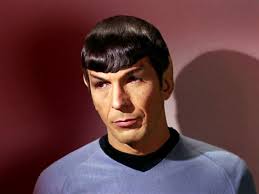
Spock was never purposefully written as autistic. He was written as an alien, and perhaps more importantly to the creators as a person of mixed race. He faces a double conflict: the usual Vulcan struggle between their natural emotionalism and their logical way of life, and his personal struggle between his human and Vulcan sides. Meanwhile, as an alien on a ship of humans, he stands out unavoidably at all times. He looks different, but even if people could ignore that, he acts different. At times characters are pretty hard on him about it.
But the narrative of the show is always that this man is a hero, that he is beloved of his crew, that his unique perspective and talents save the day again and again. His impassivity is frustrating in social moments, but then he is able to coolly study a life form without giving more than an afterthought to his own imminent death, and we realize that his Vulcan-ness is not a defect, it is intrinsic to the way he is. It has advantages and disadvantages, but in general Vulcans are written as admirable, powerful, intelligent, and peaceable. The chief tenet of their philosophy is IDIC, infinite diversity in infinite combinations.
From a 1960s perspective, the writers were very loudly making a statement about the value of every person, the beauty of diversity, and their faith that the future would be a place of universal acceptance, not only for all humans, but for all the beings we had yet to meet. The show was rarely subtle in its pro-civil-rights, anti-war, and anti-racism stance. Spock was one of many symbols of this stance, encompassing a lot of these values in one guy. As a person, he’s a pacifist and adamant respecter of others’ way of life. As a member of the crew, he occasionally faces racism which is adamantly condemned onscreen. (The famous “leave the bigotry in your quarters, there’s no room for it on the bridge” line.) There are moments when the way his friends tease him strike us modern viewers as almost as bad, but for the most part, the writers made an effort to show that Spock’s acceptance on the ship is unquestioned—especially with the captain firmly in his corner.
What is it about this guy that made thousands of oddballs, recluses, eccentrics—almost certainly, a ton of undiagnosed autistics—instantly fixate on him?
A lot of ink has been spilled on this topic. I don’t think, primarily, it’s because he acts autistic, specifically. He acts like some autistic people do, but almost none of us have that kind of emotional control. His brilliance and scientific mind strike a lot of us as what we’d like to be, our imagined best self.
I think it’s just that he noticeably thinks much differently from everybody else. Autistic people vary so dramatically that there’s no one way we act or think. But the universal quality we all share is that we act different. It’s the thing that calls to bullies like a moth to a streetlight: there’s something odd and weird about us, we don’t quite fit in, and some instinct in a lot of people tells them that we must be made to fit in and punished if we don’t.
That never happens to Spock.
He’s odd. He’s weird. He fails to get some jokes and then makes ones so subtle half the people present think he was being serious. He trots out numbers and factoids nobody asked for. He won’t smile. He looks like a complete stickler for regulations and then commits a mutiny.
And his arc isn’t him changing and learning to be like other people. It doesn’t involve anybody quietly taking him aside and saying he’ll never be loved and valued if he doesn’t learn to smile and laugh.
Instead, when he’s his own particular brand of weird, Kirk looks at him fondly and Bones makes salty but transparently good-natured digs. (There are, unfortunately, exceptions to this; I’m the first to say the series isn’t perfect.) Then Spock turns around and saves the day, not in spite of being himself, but because of being himself.
Is it any wonder that a ton of people who had been told all their lives that the only solution to their problems was ironing out the weirdness imprinted on Spock? They wanted to be with him. They wanted to be like him. They shared the collective fantasy that someday Mr. Spock would land in their backyard and take them away to a place where everybody belonged.
Decades later, autistic people still feel that way. Fan spaces are full of people from ten to a hundred who deeply identify with and care about Spock, and in my experience almost everyone is either autistic or some other form of neurodivergent. I feel very at home in these spaces because we’re all weird there, and it’s okay to be weird.
Why people hate Vulcans
Well, the show moved on after the original series. It took some time and an incredibly dedicated fanbase, but we got The Next Generation, Deep Space Nine, Voyager, and Enterprise. This was the era I grew up in, when we watched Star Trek faithfully every single Saturday without fail, including in rerun season, and filled our Christmas and birthday wishlists with Star Trek merch.
My brother imprinted on Data instead of Spock—same reason though. I wanted to be Jadzia Dax. Star Trek reliably had at least one member of the crew who was the “Spock” of the series: an alien, a robot, an ex-Borg, somebody who thought very differently from others. I don’t think they really knew they were appealing to autistic people, they just knew that people loved Spock so they needed a Spock in every crew. I could wish they had experimented a little further with different types of personalities, because it was never about having no feelings. It was about not being like other people. But still, we always had Odo and Seven and T’Pol to puzzle over and love. And then other characters who weren’t meant as the Spock but meant just as much: Worf, Dax, B’Elanna Torres.
But Vulcans, as a culture, didn’t have this role of “beloved crew member who’s different and we love them.” As they developed, they often became a symbol for something very different—which, to be clear, was a role they often had from the very beginning: the force of reason as opposed to emotion. The writers were generally invested in the idea that reason without feeling was cold, empty, doomed to failure. So that was how the Vulcans were. They existed to come up with ostensibly logical but actually fairly hollow solutions to problems, so that our human heroes could do better than that.
They also became, regrettably, the planet of the racists. Because they’re superior to humans in so many ways, naturally, they look down their noses on everybody else. I love the DS9 episode “Take Me Out to the Holosuite” for the chance to see our heroes suck at baseball but have an amazing time. But did we really need the antagonists to be a whole crew of racist Vulcans from a Vulcans-only ship who irrationally need to prove they’re better than humans? Given it’s almost the only time they appear in the series, it gives the impression that that’s what Vulcans, in general, are like, instead of just that incredibly illogical and racist captain.
That continued with the movies, where Spock faces, not just occasional bullying by other children (we had that in the animated series) but frequent racism from Vulcan leadership. Then, of course, the whole planet gets blown up, which upset the heck out of me as a lover of Vulcans.
Still, it isn’t all the same story. There are times we see good Vulcan characters. In the movie, Sarek comforts his son in a way that is still very Vulcan but a lot more loving than before. In short, there’s still plenty of room to believe that Vulcan is a complex culture with good and bad points, good and bad people.
But, as we move into Strange New Worlds, I’m beginning to feel…kind of weird about it.
The problem with SNW
Personally, I love Ethan Peck’s Spock. You can tell the actor is really trying to dial into what his character is all about, while showing us a younger, less confident Spock.
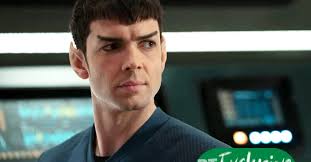
He also seems to know very well about Spock’s relationship to the autistic community. A few of his comments suggest he’s leaning into it. And his Spock has an odd vocal intonation—always uptalking on the word “to” for instance—which definitely isn’t taken from Nimoy’s portrayal, but would make sense in an autistic character.
The writers also seem to know. And…I find I wish they didn’t.
Here’s the thing: when you take autism coding, a symbol of the emptiness of pure reason, and “planet of the racists,” and mix them all together, the obvious result is: autistic people are bad because they can’t feel and connect the way proper humans can, and autistic people are naturally unkind, prejudiced, and mean.
I don’t think the writers remotely meant to say that.
There have been hints of it here and there throughout the show, but generally they can be explained away. I hated “Charades,” it feels like a complete abandonment of both Spock’s character and everything we know about Vulcans, but I can see it as an autism cure metaphor in a way that kind of works. Spock becomes human, suddenly he relates to people great and everyone reacts more positively to him than they ever had before, and Chapel gets the hug from him she always wanted. But that’s not the real him, is it? And Chapel recognizes this and helps turn him back into his real self, because easier for other people to deal with isn’t the same as right for him. In short, don’t try to fix autism, try accepting the autistic person you’ve got.
But on the other hand, it only makes more obvious the fact that the SNW crew doesn’t accept him and make the effort to connect with him in the way the TOS crew does. When the TOS crew is faced with a Spock that doesn’t act like Spock, they’re generally horrified. Even Bones wants to fix him right away, because he never actually wanted Spock to stop being Spock. The SNW crew just doesn’t pal around with Spock the same way–until he’s human and can laugh with them.
Then, of course, we’ve got the racist mother-in-law and Amanda’s memories of being completely marginalized on Vulcan, and it’s like…how messed up is this planet, and why? What changed them from being philosophers whose key value is diversity into these superior, racist assholes? Out of one side of the mouth, we’re saying Spock is at his best when he is half Vulcan, while out of the other we say it’s….kind of bad to be Vulcan. At the same time as heavily connecting being Vulcan with being autistic. I don’t love it!
But, hey, it’s a misstep and definitely unintentional—an accidental mixing of Vulcan tropes—so let’s give them a pass. I tried to. I hate the episode but it doesn’t discount the many great episodes of the series.
But then they released the season 3 teaser. If you haven’t seen it, I strongly encourage you watch it before reading the rest of this article—I don’t want to prejudice you by my opinion. Given what you’ve read so far about autism coding, Spock, and Vulcans, can you see what I’m going to object to here?
If you don’t want to watch it, in brief summary, it involves Pike, Uhura, La’an, and Chapel turning into Vulcans (through some dodgy almost-definitely-illegal genetic manipulation). After a minute of wailing and rolling on the floor (I’m unclear if it’s that it hurts or if they don’t know how to manage Vulcan emotions, before then mastering them in under a minute), they all get up as perfect, flawless Vulcans.
And the first thing they mention? That they’re full Vulcans, but Spock is only half. “Is that not logical?” asks La’an.
Spock looks devastated but admits, “Indeed.”
They harp on this again within the five minutes, with Pike saying, “Four and one-half Vulcans to beam down.”
I think we’re supposed to think that’s funny.
But, if you’ve been following Spock at all, you know that he identifies strongly with his Vulcan side, having chosen to follow the Vulcan way, and does not introduce himself as a hybrid, like ever. The most offensive thing people ever say to him, next to insulting his mother, is to call him a half-breed. The Vulcans he grew up with taunted him like that all the time. It’s incredibly hurtful to him and I’m quite certain his crew knows that.
I just have so many questions about this. Did they forget that Spock hates this? Did they lose the ability to prioritize Spock’s feelings just because they appear emotionless? (Remember that Vulcans do have emotions, they suppress them, but it’s possible the show writers forgot or never knew this.) And—where’s the logic? Let’s assume they’re completely emotionless and say only the most logical thing. Where’s the logic in harping on somebody’s heritage? What does it help? Is that going to help them complete their mission? Is that what a logical mind would choose to focus on, in the face of an entirely new body and an important upcoming mission?
No, it isn’t, so at first this seemed inexplicable. Saying irrelevant, pedantic, hurtful things isn’t logical at all.
It is, however, a stereotype of what autistic people do.
That urge to correct perceived inaccuracies is a common autistic thing, which I deal with and all my kids deal with. Sometimes it hurts people’s feelings. We have to learn not to do it when it’s inappropriate. Because, deep down, we all do care more about each other’s feelings than being right, the thoughts just don’t always arise in that order. I’ll admit I have the tendency to burst in, “Actually the adjective for iron is ferrous! Though come to think of it, you didn’t ask, sorry.” It’s not logical at all, it’s just a quirk that’s sometimes frustrating to deal with for both me and others. Neurotypical people also have the occasional urge to make inappropriate comments—just different ones.
I have no clue what the writers were thinking of with this. Maybe they want a parallel to “Charades” where Spock realizes he doesn’t want to be fully Vulcan either. Maybe they want the human characters to understand Spock better. Maybe we’re going to have a deep dive into innate Vulcan traits that real Vulcans have learned to deal with in childhood but these characters haven’t (I doubt it).
But I think that unconsciously, when neurotypicals realize they’re dealing with an autistic-coded character, they start putting their impressions of what autistic people are like on that character. Making pedantic comments like that is one of the big ones people notice, so bam, put that in. And if those comments turn out to be kinda racist and super hurtful to a beloved character we all identify with? They…simply didn’t notice that that would hurt us. They were imagining an audience that knows autistic people, not an audience that is autistic people.
I just think of Spock, who is deeply committed to the Vulcan way and insecure about whether that’s good enough to be accepted by other Vulcans, hearing this. Hearing, “You’re not one of us. You’re half of one of us. And that half is racist, because that’s what, genetically, we are. You will never be accepted by your people, even if when those people were your friends five minutes ago. Nobody will ever accept the whole of you.”
You can understand why, in the first half of it, I thought it must be a nightmare Spock was having.
I don’t really know how to respond to all of this. Do I quit watching the show? Skip that episode because I can sense it’s going to drive me nuts? Watch it, and then write a fic version which corrects everything I don’t like about it?
I don’t know. Really, a part of me wants to take Star Trek away from these writers and give it to the freaks and nerds who were a part of this from the beginning. Give it to the stardate-counters and episode-memorizers and the fanfic writers. Hire Diane Duane to tell you what Vulcans are actually like and how Vulcan broke out of millennia of violence when they discovered the value of diversity. Hire Leslie Fish to make them gay. Watch TOS until you realize the heart of the show is believing in a future where everybody belongs.
There are shows that exist to afflict the comfortable, but Star Trek mostly comforted the afflicted. And though society has made a lot of progress, we’re still afflicted. People are left out and bullied and summed up by their gender or race, people are told they have to fake being normal before they’ll be worthy of love, people who are mixed or bi or nonbinary are told they don’t fit in anywhere. We need to see people like ourselves finding a home in Starfleet, because that’s what it was always about.
Eh, or maybe I’ll just watch Prodigy some more. It’s not trying to be complicated and therefore it hits those Starfleet values very well.
 Sheila Jenne, author
[…] When characters are given a serum to change their species, they develop a bunch of stereotyped (and autism-coded) traits and one of them straight-up turns evil. That’s exactly the kind of thing I’m talking […]
LikeLike