The P in pterodactyl is silent, therefore you can’t hear it go to the bathroom.
That isn’t a joke, but this is:
Why can’t you hear a pterodactyl go to the bathroom? Because the P is silent.
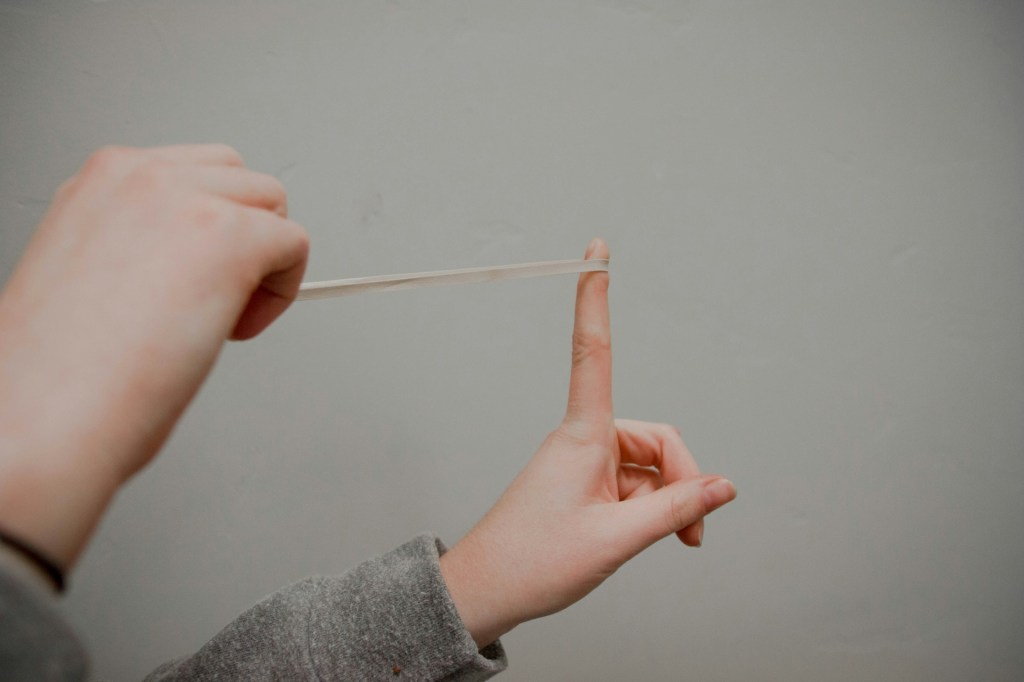
Humans have a thing for tension and release. Jokes are the most obvious example. If we’re primed beforehand, and a surprising answer hits us just right, we laugh and laugh. It would be almost impossible to explain to an alien why. It’s just that the question or story builds up a kind of tension where we wonder, where are they going with this? And then that tension is popped all at once with the answer.
It’s not just jokes. Rhyming poems are another good example.
Even tiny fleas
Have smaller fleas to bite ’em.
And those fleas have smaller fleas,
And so ad infinitum.
Somewhere at the back of our mind, we’re thinking what in the world could rhyme with “bite ‘em”? And then the satisfying answer: ad infinitum, which we didn’t expect, but which fits so cleverly.
Or music. A lot of good classical music builds up and builds up and then, just when we can’t take it anymore, there’s the chord that resolves it all.
Setup and payoff
Stories work the same way. We don’t simply want to read a series of events. A plot is something more structured than that, in which tension is deliberately built up and released. We see this primarily on the large scale, in the familiar rising action/falling action plot diagram.
But it’s also an important factor in smaller parts of the plot as well. If, in the final showdown, the main character reaches in her pocket and pulls out the tool that will solve the situation, we’re not generally impressed. But if, in chapter one, she picked up that tool and thought it would be good for nothing and shoved it in her pocket? Now we have a completed setup and payoff. It’s no longer out of the blue, it’s now almost like the punchline of a joke. It’s satisfying.
That’s where we get Chekhov’s gun. The premise is that if a gun is in a scene at the beginning, it must be fired by the end. Why? Because the audience knows you’re going to try to tie things together later, so they’ll be looking at that gun expecting a payoff. You have to give them one, or they’ll wonder why you bothered putting it in.
I’ve been reading a lot of Agatha Christie lately, because nothing gets me doing chores around the house so well as a soothing British voice telling me about murder. In my opinion, the quality of her mysteries is highly variable. Some blow you away with the way they tie it all together; others feel completely out of the blue and you’re just ticked off at Poirot for bringing in all this secret knowledge at the eleventh hour.
Take these two (mixed up and anonymized, for spoiler reasons) mystery plots:
A character describes in detail everything he did during the murder, with one barely-noticeable time skip. All the clues point to him, but we ignore them because after all, we know exactly what he did during the murder. Then at the end it’s revealed that he did it. We immediately flash back to that tiny time skip and go ohhhhh, got me there! I could have seen it all the while!
A complicated mystery has about ten million incomprehensible clues. There’s spy stuff. There’s a romance. People turn out to be related to other people. We interview a zillion people and find out so many of their secrets. Then the inspector goes to Poirot and Poirot says “It’s obvious. All of the clues are a red herring. They stole the plot from a mystery novel I happened to have read last week. It was the couple in number 16. The spy stuff, the romance, the secret adopted baby, the weird clues in the house, are all irrelevant to the murder. You idiot.”
To which I’m like—what am I even here for? I couldn’t have guessed that because I haven’t read the book Poirot has. All of these clues I’ve been carefully cataloguing are for nothing.
To me, that plot was like “Why does the chicken cross the road? To get to the other side!” The surprise being that there is no surprise is not a very good surprise. No setup, no payoff, no satisfaction. It’s no fun!
I don’t write mystery, but tension and release are in every genre. In suspense, it’s often the threat of death and trying to see how our characters will stay ahead of it. In romance, it’s the yearning for the characters to get together. Sci-fi and fantasy, which can include any kind of plot, will include a variety of types of tension, big and small.
The twist
Some writers love plot twists. And some are good at them. But some seem to think that a twist is simply a surprise. For instance, in the Star Wars sequel trilogy, everybody wondered who Rey’s parents were. Were they maybe somebody we’ve heard of before? People speculated she was Obi-Wan’s secret child or something cool like that.
The answer that finally came was surprising, but also disappointing. It wasn’t set up at all, it wasn’t teased, it wasn’t cool. I have the suspicion that better ideas were in the running, but discarded because “the viewers might guess.”
What they don’t understand is that surprise isn’t actually the point of it. The point is the release of tension, one way or the other. Maybe it’s a surprise. Maybe it’s the thrill of finding out you are right and therefore clever and winning at this.
Most importantly, there’s the feeling that this reveal was signaled, and you could have guessed it, even if you didn’t. You take a second and rethink the whole book, noticing in retrospect that the signs were all there.
A lot of media is ruined if someone spoils it for you. The twists are simply surprises, and without the surprise, there’s a lot less point. Star Trek: Discovery was spoiled for me long before I watched it, and the first season just hits different when you already know who all the secret baddies are.
Whereas the Locked Tomb series is full of twists, but it’s actually more enjoyable on a reread than it was the first time around. Why? Because then you can see the setup for the twist you know is coming. It’s like how getting pranked can be a fun surprise (if it’s a good prank), but it’s way more fun to help set it up to trick the next person.
So this is why I say, when writing twists, don’t worry that people will be able to guess ahead of time. They very well might, if you set it up right, but that’s okay. Think about which is worse: the readers guess your twist, or the readers add up all the clues and think of a perfect way that it could go….and then you don’t go that way, leaving them disappointed because the idea they thought of was better than the one you did!
Types of tension
There are many kinds of tension which you can build up and release within a book. Some will depend on genre, and some will appear in small ways in almost every story.
Question and answer
This is the intellectual type of tension. You give your readers a question, like “who is behind the conspiracy” or “who killed Caleb Redpair?” and then they try to answer that question alongside the characters. When you use this kind of tension, make sure to ask the question. That is, you want your readers to be aware of the problem they are trying to solve.
I find it helps to make it quite explicit: your characters say aloud, “The whole problem we need to solve is who blew up the space station!” Then the readers know what to look for; it shapes their engagement with the whole plot. However, you don’t have to answer the exact question that was asked. Maybe when it comes down to it, nobody blew up the space station, or maybe we find out who blew it up but it brings us no closer to why. But giving them a clear question to focus on for the main plot helps them engage.
Kind of like how textbooks will sometimes prime you before the chapter with, “What are the main causes of wind?” Reading a chapter about how wind works can feel like loading information into your mind that you didn’t ask for. But primed with that question, your mind can now sort out the information you receive into clear answers to it.
Intellectual tension can come in a smaller scale, too. When you drop mysterious backstory or worldbuilding hints, the reader forms the question, “Why is she so sad?” or “What’s the deal with the dragons?” which will make them much more interested when you make that reveal. This changes worldbuilding from tiresome stuff to get through before you hit the real story, to an interesting minor mystery to keep them interested while the larger plot builds up.
Breadcrumbs
This kind of setup and payoff is the opposite of the previous one. Here, you don’t give them a question; the connection between a later event and the setup earlier is a surprise. I find it works best with small things. Some detail about the main character’s mother is tossed in early on, apparently just for color, and then twenty chapters later it turns out to be important.
This doesn’t focus your readers’ attention in the same way as the previous type. They’ll be unconscious that a connection exists until the circuit is completed. But when the reveal does happen, they’ll flash back to what happened earlier and go “ohhhh.”
It makes you look very clever, because wow, you seeded that reveal all the way back at the beginning! But because you, the writer, experience the story outside of time, you can insert the clues after writing the reveal. If your character needs to reach in their pocket and pull out the crucial tool, you can just scroll back to chapter one and insert a scene where they pick it up.
Life or death
The kind of tension where your characters are constantly trying not to die is a pretty powerful one. Each threat is a kind of question mark, and when they escape it, there’s a release of tension.
Some genres lean very heavily on this kind, to the point that if the characters aren’t in mortal danger for too long, the readers lose interest. But in most, you don’t want to use this tension constantly, because it hits harder when it’s interspersed with slower-paced scenes. The quieter scenes build up the characters and relationships so that you care when their lives are in danger.
Pining
An interesting thing I’ve learned lately is that there are genres (mainly romance and romantic fanfiction) where there is no intellectual tension at all. There’s no question whether they’ll get together; of course they will! In many cases there’s not even much question how they’ll get together. Readers don’t keep turning pages to find out what will happen. They do it because they want to see it happen.
You can give a romance reader a full plot synopsis, beginning to end, without “spoiling” it because the tension is not about the plot. If you are skillful in building up romantic tension, the readers feel it and long to resolve it by seeing them kiss. Stories have managed to hook me for a hundred thousand words on the strength of “wow these people like each other so much and are so sad that they’re not together, I want to see them happy and together.”
How to invoke that kind of tension is another question. It generally relies on strong character work and many emotional moments. You have to constantly remind the reader of the emotions involved, whether that’s desire, yearning, loneliness, or rejection. (If you don’t like romance, you’ve probably been annoyed by this in the past: why are they constantly pulling me out of the story to remind me the hero’s hair flops sexily over his forehead? who cares? The answer being: romance readers. If this kind of thing annoys you, romance is probably not your thing.)
Becoming a master of tension
As when you’re knitting a blanket, knowing when to tighten up the tension and when to loosen up is the difference between an amateur and a master of the craft. You sprinkle in the different kinds of tension and satisfy each one just as it reaches its peak. Generally, you try to have at least one kind of tension going at all times—this keeps the reader hooked. But by mixing up the types of tension, you ensure they don’t get bored.
My (embarrassingly messy) bracket diagram is a way of expressing this. You are constantly opening brackets and closing them. You never want to close all your brackets mid-story, but you definitely want to end the story with a dramatic closing of as many brackets at once as possible. That gives the readers a thundering release that leaves them satisfied when they close the book: all the questions are answered, their desires are fulfilled, and things they didn’t even realize were important had unexpected punchlines.
 Sheila Jenne, author
[…] what we talked about a few posts ago: humor releases tension. So putting it in at the right moment can help wind the audience down, make […]
LikeLike
[…] I have a neat little trick which probably every author knows. Every time I need a character to whip out a tool or solution, I go back and put it earlier in the book so it’s not a convenient coincidence, it’s something I’ve already set up. You put the keys in their pocket in chapter ten, offhand, so that when they need them in chapter twenty, it gives that nice click of satisfaction you get when something has been set up and paid off. […]
LikeLike