I’ve been complaining a lot lately about Amazon. Particularly, the way it forces both readers and writers into a monopoly by being the only place we can find each other. As there is less and less competition, the deal just gets worse and worse. The overall “enshittification” of things, services that hike subscription prices while cutting services, even the price of eggs, all come down to monopoly and its power to manipulate us in subtle ways.
The problem, though, is Kindle Unlimited. KU’s deliberately monopolistic policy of only listing books exclusive to Amazon means that many indie authors can’t afford to be listed anywhere but there. It’s too good a perk to lose. While the payouts on KU aren’t as good per book as selling a copy, it’s easier to get readers to give a new author a chance when they can try it at no cost. Heavy readers, like romance readers and book reviewers, rely on KU to read many more books than they could ever afford to buy. And these are exactly the readers you want to win over to get attention, reviews, and page rank!
Kobo Plus presents an alternative. It’s roughly the same business model, but without the exclusivity requirement. Indie authors who aren’t Amazon-exclusive can be listed there either by getting an author account on Kobo, or by distributing through Draft2Digital (which is what I do). At that point it’s a matter of checking a box, which you can uncheck at any time to remove your book from Kobo Plus.
How does it compare for authors?
It’s hard to say which service gives you a larger payout as an author: both vary their payouts based on the number of subscribers, divided by the amount they read. KU pays by the page read, while Kobo+ pays based on time spent reading. In either case, you can expect it to come out to less than simply buying your book. But you’ll also have more people taking a chance on it.
I’ve heard authors who are in KU say, “I can’t afford to take my book off it, I get most of my revenue that way.” But if your book is available to a large chunk of readers at no additional cost, of course that’s what people will choose to do! If your book isn’t in either service, you may find you sell more copies than before. Is it enough to make up the difference? That will really depend on your popularity and your genre.
But, assuming you do want to have your book available for some readers to enjoy on a subscription model, there’s no particular downside to Kobo+. I have Bisection there while also having it on Amazon (not KU), Hoopla, Overdrive, BN, and pretty much everywhere. I haven’t yet received any payouts from Kobo+, so as far as I can tell nobody’s reading it that way, or not for enough minutes for it to count. (I’m unclear whether you get paid for a small number of minutes; from what I can tell, yes, theoretically, but until you have $50 total that they owe you, they won’t cut a check. But I may be wrong on this.)
How does it compare for readers?
Price is one of the main differences: $7.99/month for Kobo+ and $11.99/month for KU. Kobo’s $8 plan is ebooks only or audiobooks only, with both for $10/month–still less than KU charges for ebooks alone.
As far as reading functionality goes, they’re pretty similar. If you buy an e-reader, unfortunately, that e-reader is going to be easiest to use with ebooks from the same store, but both have good options. I have a Kobo Libre, which I got refurbished for cheap, and it works fine. It’s integrated with Overdrive and it’s easy to sideload things on it that I get from other places, including NetGalley. But I can’t use it with Amazon books, because Amazon won’t let you download books anymore to use on other devices.
Kindles are a little more expensive, and because they are more “industry standard,” most services like Overdrive and NetGalley will send things to a Kindle. And Kobo will let you read its books on a Kindle.
Both companies will let you read their books on a mobile app, which tends to be what I do more, because my phone is right there. Amazon’s app is a little better for one tiny reason: you can scroll down instead of flipping pages. As an AO3 reader, it just feels more natural.
Kobo+ will let you add on audiobooks for just a couple dollars more, or do audiobooks alone for the same price as ebooks. And unlike Audible, the audiobooks seem to be actually unlimited. That’s a big plus if you like audiobooks.
One major con of Kobo+, both as a writer and as a reader, is its abysmal search function. Amazon has, of course, all the best algorithms; they’re a massive business that can afford to hire the best programmers. Kobo+, on the other hand, has all the searchability of Tumblr. You can search for a book if you know the title, or by author; or you could browse by broad genre. But there are no microgenres, no tags, no way to search by topic.
I went looking for alien romances, thinking I’d see what was top rated in the subgenre, only to find that the only books it turned up were books with “An Alien Romance” in the title. So I have to do my searching elsewhere, then click over to Kobo and see which books are there. Which isn’t as many as I would hope, considering most of the “best of” lists are made by Amazon readers, and everything in KU isn’t on Kobo+.
Which brings me to the biggest problem.
The catch-22
The real problem is this: Kobo has a vanishingly tiny market share compared to Amazon, and its catalog is correspondingly smaller. Writers don’t want to switch from KU to Kobo+, even with the advantage of getting to be everywhere else as well, because there aren’t as many readers there. I have gotten a good 90 or 95% of my sales through Amazon, so I do understand the feeling that being published anywhere else isn’t worth the trouble.
Meanwhile readers don’t want to pay for Kobo+, even though it’s cheaper than KU, because the writers aren’t there. The catalog is smaller, and the books you see promoted on Reddit and Facebook and everywhere else will probably not be there. Amazon already has a functional monopoly on much of the indie book market—because while other companies have books, they don’t have the same books.
There doesn’t seem a way to move everyone, writers and readers together, away from Amazon and onto Kobo, because nobody wants to go to a party and be the only person there. And it’s doubly hard given the searchability problem and overall clunkiness of the website.
The one bright side, I guess, is this: while none of the books in KU are on Kobo+, it is also true that none of the books on Kobo+ are on KU. If you subscribe to Kobo+, you’ve got a good chance to discover something completely new. It could make sense to subscribe to one for a while, then cancel and switch to the other, to get more variety in what you read.
My foray into Kobo+
I’ve been having trouble reading books lately, while devouring lots of fanfic, and it occurred to me part of the problem is the cost of investing. If I buy a book, I feel obliged to read it, and then it starts to feel like work and I don’t want to anymore. Whereas with fanfic, it’s free, and I can simply read anything I like and quit at any time if I don’t like it.
So I decided to get Kobo+, starting with the monthlong free trial. I felt like subscribing and reading a large catalog for free would give me the same effect. And so far I think it’s been true. I’ve read a number of things, idly and without really trying to, that I probably wouldn’t have spent money on based on just the blurb.
Unfortunately, I found out today that nobody actually gets paid for reads I do while on the free trial. That feels really unfair to me. Sure, they don’t want to lose money on people doing free trials, but…they are expecting the authors to take the hit instead. I don’t like the thought that I’ve been reading these people’s books for free, and I kinda wonder if I shouldn’t save the rest of my reading for my first paid month just to make sure they still get paid.
Anyway, what payment I can offer for what I’ve read so far is sharing the titles with you. This can help overcome some of that findability barrier. While I keep the subscription, I’ll try to keep doing this, as there aren’t enough sites that list and review specifically books on Kobo+.
A few books I’ve read so far:
The Alien’s Zookeeper: An alien trying to abduct zoo animals accidentally abducts the zookeeper, too. A cute sapphic romance, not very long, just a fun time. It’s also the first of a series in the same universe.
Lunar Logic: Robots working on the moon discover they’re not alone in the universe, that they’ve been programmed by humans.
Taji From Beyond the Rings: This m/m alien romance reminds me a lot of the Foreigner series. A diplomatic aide is confused all the time amid a deep and complex alien culture. There’s political unrest he doesn’t understand at all. Also a hot guy with cat ears.
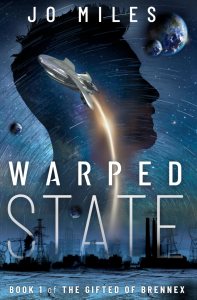
Warped State: I haven’t gotten far in this yet, but it promises to be a revolutionary space opera and the style is good.
Today, I had nothing much going on, so I asked Twitter and Bluesky to recommend me books on Kobo+. I read the first chapters of most of the books recommended (skipping a couple that were too far out of my usual genres).
I have to admit, I was expecting a certain amount of bad writing. I mean, indie books can be anything; nobody can stop you from publishing your first draft if you really want to. Some of them had covers that weren’t doing them any favors. But to my surprise, not one of them was poorly written at all. They all left me intrigued and impressed with how much worldbuilding and character development they managed to slip in without neglecting that initial hook of plot.
Here are the books whose first chapter I read the whole way through. A few, I read a second chapter as well, just to get a handle on what was going on…or because I was that engaged.
Insiders by Shannon Knight

An epidemic, and a group of people that live inside pipes and tunnels on a space station. We’re dumped right into disaster; I’m invested immediately but a little scared too—I can tell things are going to go badly right away for this little girl.
The Immortal Part of Myself by MJ James
A bit of a slower start with some fascinating worldbuilding, but a big hook: this woman is escaping from her abusive husband, and I am getting the impression that she killed him. I’ll probably be back to finish this because the pitch included a sapphic queerplatonic partnership and relationships like that are catnip to me.
A Summer With the Immortal by Paris Vivian
The biosphere suddenly starts evolving rapidly, creating a world full of strange plants and animals: algae that can grow into a bus, lilies that transmit radio frequencies. I can’t get a handle just yet on the plot, or what the main character is like other than that she is autistic, but the blurb promises a romance.
Adrift in Starlight by Mindi Briar
This leans queer romance, on a different planet with cyborgs and genetic upgrades. A courtesan is given the job of seducing a lady for somebody else. That certainly couldn’t go wrong in any way…
Yours Celestially by Al Hess
I’m familiar with this one as a fellow SPSFC finalist. Fun concept where people can be resurrected by technology, but there’s a digital angel that hangs out with you between one life and the next. And that angel has a crush on somebody.
Twice-Spent Comet by Ziggy Schutz
Dreamy interludes surrounding a mysterious imprisonment and a fascinating group of characters. Somehow I get the feeling the government that’s imprisoned them is the real bad guy. Magic is promised to show up later.
Kotov Syndrome by S. Morgan Burbank
The main character fell in love with an AI years ago and is still suffering from the devastating breakup. It feels….eerily plausible, to be honest! I hardly know whether to root for a second-chance romance or for her to head for the hills.
Spark and Tether by Lillian Zenzi
This began with a prologue that takes place years after the first chapter, and it gave me very little information, so I read the first chapter as well. The main character seems like an interesting guy, full of mysterious cyborg implants and with his life falling apart for reasons we don’t know. There is a romance but I think sci-fi mystery/suspense is the main plot.
Glorious Day by Skye Kilaen
“It had been difficult that morning to fit treason in around my duties as vice-captain of the castle complex’s security forces.” Killer opening line, tells us a lot while also being funny. The main character has a forbidden-love thing going on with the princess, the city is in a state of unrest, I think I’m sold! Because it’s first person past (my personal favorite) I didn’t realize it’s sapphic till the end of the first chapter. Funny how I just assign soldiers as male without a thought.
Triple Strike: Threads of Fate by GM Gray
Space pirates! You know I’m down for that always. And the first pages are zippy and fun. We’re asked to swallow that these aliens just happen to look like elves and just happen to act exactly like Vikings, but in a tongue-in-cheek way that made me say, sure, why not?
Dexter & Sinister by Keith W Dickinson
A steampunk setting, with different scruffy characters and a talking cat! Not much plot revealed in the first chapter, just vignettes introducing the various people. It definitely feels Pratchettesque.
The Calling by Branwen O’Shea
Post-apocalyptic dystopian. This teenage boy and his sister live underground because the world above is frozen. On the YA side but definitely intriguing.
Bridges of Smoke by Julie March
This one starts with a normal moment of fun between college-age kids, but pretty soon an apocalypse breaks out and everybody’s freaking out. Possibly too much disaster for my taste but the style is smooth.
 Sheila Jenne, author