Nobody wants to be mistaken for AI. At the same time, we don’t want to write worse just to avoid those accusations. AI learned its style quirks from us, so it’s naturally going to use things humans also love to use, like the em dash. Do we really have to ditch them to prove we’re human?
In short, no. But I do think there are some key things we can do to sound less like AI without sacrificing our style. The secret is to look beyond little quirks like dashes and into the heart of a piece—because it’s the heart that AI is always missing.
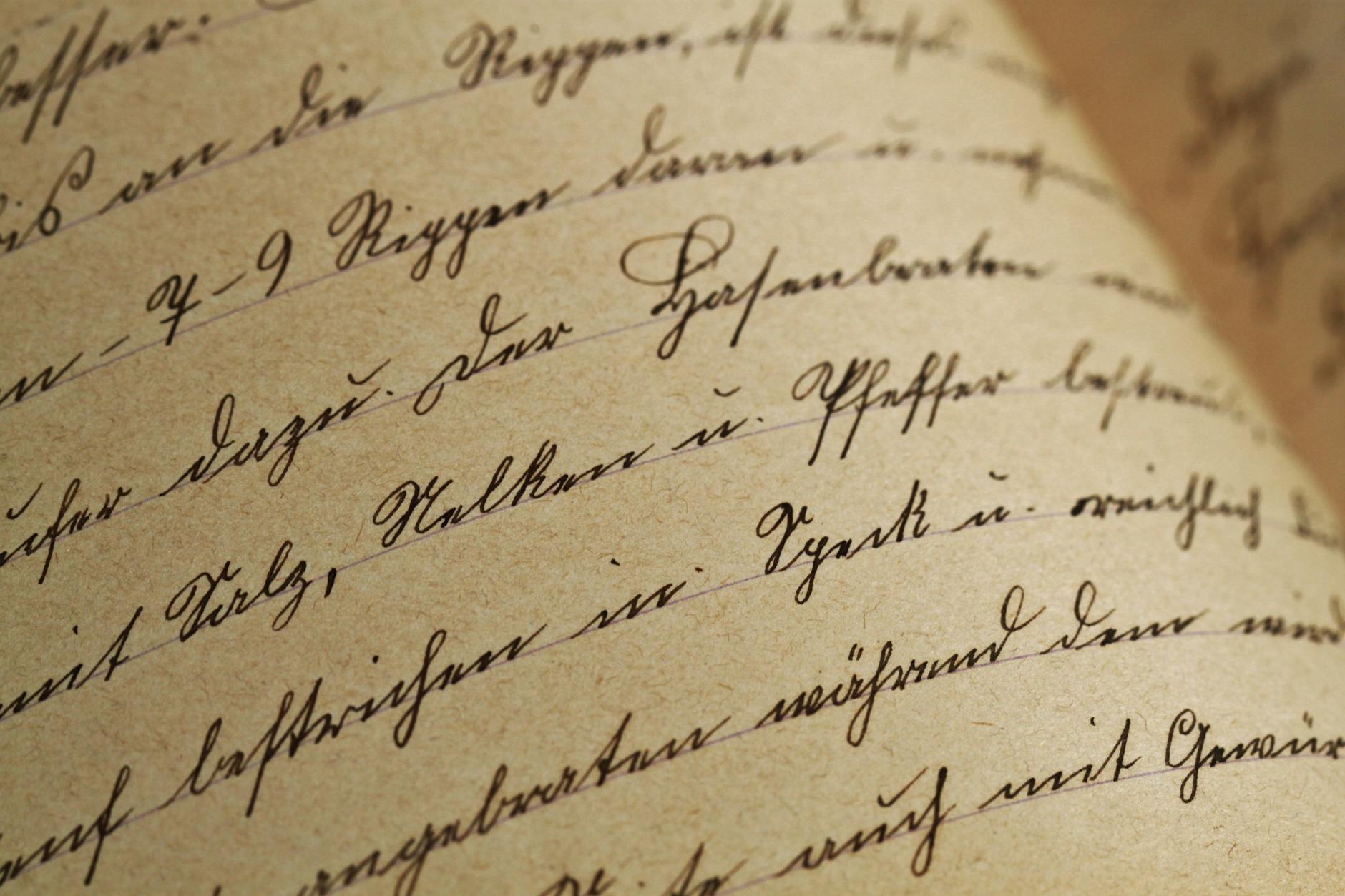
A box with no contents
I read an article once (which of course I can’t find now) comparing AI to an empty box. As if someone had realized people like getting packages on their doorstep, failed to understand why we like that, and just delivered the empty cardboard box. The machine is attempting to duplicate all the things humans do when we have something to say, but in the end, it never says anything.
If you have stumbled on an AI piece recently, you may have noticed that your eyes sort of glaze over after the first few paragraphs. It feels like it’s your own fault—why can’t you focus on the article? The answer is generally that you started reading to find information or insight, and you haven’t found it yet. You can read clear to the bottom without finding it!
The prompter has something to say, but that information is probably just a sentence or two. Perhaps the prompt was, “Cleaning your house is worth it.” And then that one thesis is stretched over 500 words or more!
The first paragraph might seem good, it’s just a rather punchy way of saying that cleaning your house is worth it. But then the second paragraph has the exact same message. And the third. After a while, consciously or not, you start to notice that there is no new information.
Real authors take you on a journey
A human writer, unless they’re trying to pad a word count, tends to make a point in a few sentences and then move on. I was trained to write concisely, myself. Many assignments came with length maximums, not minimums. As a result, I prefer to say things one time only, unless there is something that actually needs to be expanded or clarified.
Humans also are always moving from one idea to another, especially as we move from one paragraph to the next. So if one paragraph conveys one idea, the next paragraph will tend to be about something different. If we’re making an argument, that means each paragraph leads the reader on the next step of that argument, all the way to the conclusion. If we’re explaining a concept, the next paragraph will have the next part of the concept. Transitional sentences and words help the reader understand the connection between the two paragraphs, like how I began this one with “humans also.” That way you know it’s an additional point about human writers.
Often the journey of the essay mirrors our own journey in coming to understand the topic. I’m a discovery writer myself, so as I write, I think of new topics to bring in and explore. That makes my writing a little less tidy to outline, but you can follow a linear thread through the piece. Sometimes writers move back and forth between two ideas. “At first I thought this….But then later I realized that….And finally I concluded the answer was actually…” This is a journey AI doesn’t know how to take.
To sum up: if you have a lot to say, your writing can’t be mistaken for AI. Keep your word count to the amount it takes to actually make your point; don’t repeat yourself. Help the reader follow your thinking with some transitional words.
AI overseasons with drama
The first writing class I ever took, in seventh grade, introduced us to something they called “dress-ups.” These are dramatic tactics you can use to grab attention so the writer doesn’t get bored.
Dress-ups include:
- Very short sentences. Even fragments. So powerful. Wow.
- The rule of three. For whatever reason, humans love threes, so when you use parallelism, three tends to be the way to go. Single words, phrases, even sentences can be grouped in matching sets of three.
- One-sentence paragraphs.
- Contrast. It’s not just useful—it’s impactful.
- Metaphors and similes. It’s a hand, reaching through your screen, to grab you by the shirt collar. Or something.
These strategies are seasoning to punch up otherwise bland writing. But AI uses them out of all proportion to the meat of the text. After a while, it feels like you’re just eating a bowl of spice mix.
As AI uses them, I fear they’re getting a little worn out. Some of these strategies might not be as punchy as they used to be; we’ve just all heard them way too much. “It’s not X, it’s Y” is worn to a nubbin, with or without the em dash. I’ve abandoned it altogether. But the others might be still be useful…in moderation.
Remember, the whole point of punchy strategies is that they’re a change from what came before. It’s like how, in choir, singers are taught dynamic range. You can’t sing every part of the song loud, or it will have no impact at all. If there’s a big, dramatic moment coming up, you sing softly, and then bring the volume up more and more for the dramatic bit.
You just don’t want to overdo it. A text heavy with meaning and only a little dash of drama stands out much better in our overseasoned landscape.
Humans are personal
Most of us are taught to write in an impersonal, academic style. That’s a little silly given most of our adult writing won’t be in an academic context. The field of online content writing also has an impersonal style: I noticed, even before AI entered the scene, a style I was calling “contentese.” That’s the style you get when a writer is working for a company and therefore can’t put anything of themself into the work.
With AI taking up the entire market for corporate web content (much to my regret, as it was the best-paying job I ever had) humans can shift to corner the market on personal writing. That means writing from a specific angle and bringing in our own experiences.
I think it’s also okay to bring in our own style, especially in casual writing. Mistake-free writing has lost all its rarity. I think we should feel free to bring in quirks our school teachers would have marked up with red ink. By that I mean casual internet punctuation, swearing, colloquialisms like “and I went—and she was like—”. It’s okay to have a long parenthetical sometimes. You might catch yourself rambling and say, “Anyway. Where was I?” When I see a post full of casual quirks, I know it might not be edited, but I also know a human wrote it, and therefore I read it.
In more formal writing, you can’t get away with all of that. But you can still consider what makes your writing unique and personal. Is your prose spare or ornate? What kinds of metaphors do you use? What do your readers come to expect from you?
Don’t aim for a neutral, “perfect” voice. Write like yourself. It’s one thing AI can’t do.
Root out cliché
AI defenders like to point out that humans, too, train on existing writing. So what’s the difference, really? Both AI and humans do nothing but remix the same material.
To which I say, definitely not! We learn how to write from other people, and then we use those skills to say something of our own. Not every single word we write is going to be unique; it’s not all high art. But insofar as your work has something in it that no one else has written, that’s art. That’s the part of your writing that matters, the part only you could have put into the universe.
So “how to write unlike AI,” in the end, is the same question as “how to write well.” Because nobody’s goal is to produce a sort of slurry of other people’s ideas, metaphors, and turns of phrase. We want to produce our own. Imitating others is a common stage of learning, but the goal is to eventually develop your own voice, say your own ideas.
You don’t need to actually prompt an AI to see which ideas are cliché; if you read widely in your genre, you already know. You could probably write for yourself a quick summary of what the average, most typical book plot is; what the usual character is like; what the world looks like. And then don’t do that. Do something else!
You can do this at every level of writing, from plotting to word choice. AI gives you the most likely thing to come next. That’s the last thing you want to write. Guess what the most likely thing to come next is, and then do something surprising. Think of the expected metaphors for the hero’s eyes, and then pick something unusual instead. That gap between the expected and what you deliver is one of the things that makes a piece delightful.
You’re doing fine
I hope, as you’ve read my advice so far, you found yourself a little reassured. You’re already a human, after all. You naturally do things AI never could. And as you work on your writing, trying to find your unique voice, you’ll distinguish yourself from AI at the same time.
The coming of machines to any field is a major disruption. Even when artisanal products are better, companies love to cut costs by buying the factory-made version. But you’ll always notice a counter-trend, as people learn what a handmade product looks like and gravitate toward the signs of human creativity. The grain in real wood, the slubs in handspun yarn, the brushstrokes on a real painting.
More and more, I think readers are looking for what’s real, what stands out, what’s more than a mass-produced word slurry. And writers are ready for them.
 Sheila Jenne, author
Thank you for this. I recently wrote a post about the em-dash, because I’m a firm proponent of its use as an element of style and the authorial voice. I use them almost as freely as Emily Dickinson, and refuse to give them up. AI can’t do what I can do.
LikeLike
Anyway, the AI people have moved on! I’m not sure if they’ve updated the model, or if the prompters just do a find and replace for them before posting, but I’m not seeing so many em dashes in AI posts anymore. Doesn’t matter, they’re still obvious to me by their gushy style and absolute lack of substance. And we still stand out as humans—because we have something to say!
LikeLiked by 1 person